



Laparoscopy for prostate cancer
Laparoscopic Radical Prostatectomy
Indications for this surgery include early stages of prostate cancer (T1 and T2), and sometimes T3.
Radical prostatectomy involves the complete removal of tumor tissue along with the affected organ. It is considered the gold standard for prostate cancer treatment, with laparoscopic surgery being the safest and most effective therapy option. This type of prostatectomy is the optimal alternative to open surgery. It allows for rapid removal of the prostate and effectively combats cancer even in the early stages.
An undeniable advantage of nerve-sparing laparoscopic radical prostatectomy is that it helps avoid erectile dysfunction and urinary incontinence—potential side effects of radical prostatectomy that patients may experience for life. Laparoscopic radical prostatectomy is characterized by minimal trauma to healthy tissues and ensures precision in the procedures performed.

The advantages of the radical prostatectomy we perform also include:
- reduced blood loss;
- high precision in performing each stage of the operation;
- minimal trauma;
- early recovery of the patient with a return to normal life;
- shortened hospital stay.
Preparation for Surgery
A comprehensive examination is conducted beforehand, allowing for a general assessment of the patient’s condition and identifying indications and contraindications for the surgery.
Surgery for Prostate Cancer Removal
Laparoscopic prostatectomy is performed under general anesthesia and lasts 1.5-2 hours.
The intervention is carried out in stages. A key feature of this operation is the reduced risk of damaging the tissues surrounding the prostate. Instruments are introduced through 5 small skin incisions above the pubis, each no longer than 1 cm. After filling the resulting space with gas, instruments are introduced. One of the instruments inserted through the skin puncture is an endoscopic camera, providing very high-quality visualization of the surgical field. Excellent visibility is one of the most important «pluses» of laparoscopic surgery.
The second advantage is the highest precision of movements of the laparoscopic system, allowing for careful dissection of the thinnest structures. The stages of the operation essentially coincide with those in open retroperitoneal access. It is worth noting that technically, preserving the vascular-nerve bundles using the laparoscopic system is somewhat easier due to better visualization and precision of instrument movements. To remove the prostate, one of the six incisions is slightly extended. Usually, an incision in the area of the navel is used for this purpose. The length of the incision depends on the initial size of the prostate. The drains used are the same as those in open surgery—a catheter is placed in the bladder through the urethra, and another drain is a «safety» drain. Despite comparable oncological outcomes, the recovery rates after surgery and the timelines for medical and social rehabilitation of patients largely depend on the chosen surgical technique.
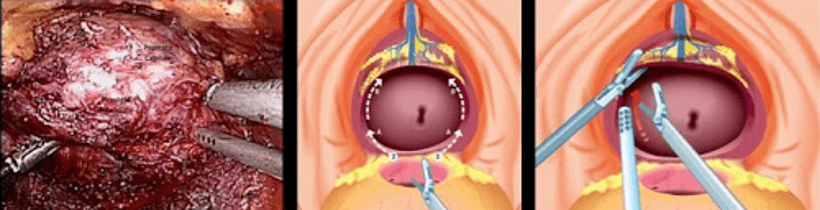
Important! Radical prostatectomy involves the removal of the prostate as a single block. The seminal vesicles and vas deferens are also removed along with the gland.
Rehabilitation After Radical Prostatectomy.
Prostatectomy is a serious intervention; however, it does not require a long hospital stay. Patients are allowed to get out of bed on the first day after the prostate removal. The catheter is removed on the 10th day. At the same time, the patient is discharged. After the stitches are removed on the 9th-10th day, showering is permitted. Patients can return to work approximately 2-3 weeks later (the exact timeline will be determined by the doctor after examination).