



PCNL (percutaneous nephrolithotripsy)
Operation Description
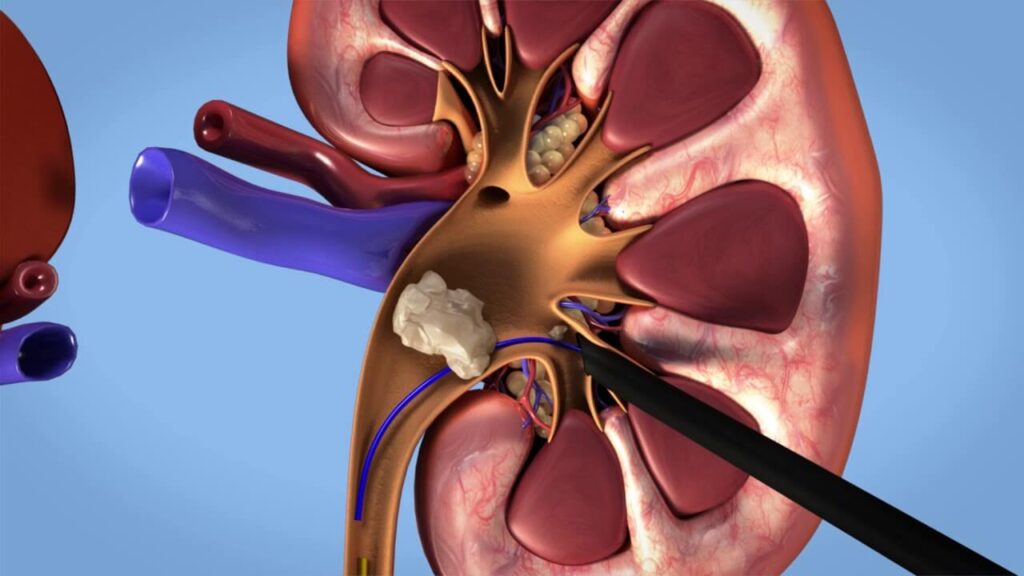
Under control, the renal calyx-pelvic system is punctured, after which the pathway is expanded and the instrument is introduced into the renal collecting system. The energy emitted by the laser leads to the fragmentation of stones and their subsequent removal through a nephroscope (in the presence of large residual fragments) or the stone is «pulverized.»
Indications and Contraindications for the Operation
Laser percutaneous nephrolithotripsy is indicated for patients with objectively confirmed kidney stones in the following cases:
- calculi larger than 1 cm in diameter;
- absence of a positive result after extracorporeal shock wave lithotripsy;
- obesity and skeletal deformities;
- stones in a solitary kidney;
- staghorn calculi;
- cystine stones (their formation is associated with a genetic disorder of the metabolism of 4 essential amino acids), which do not respond to shock wave lithotripsy.
Preparatory Stage
To prevent possible complications of the operation and create conditions for a smooth postoperative period, the patient undergoes diagnostic preparation. This includes 3 stages:
- laboratory – a complete blood count and urine analysis, biochemical blood analysis, tests for blood-borne infections (HIV, syphilis, hepatitis B and C), urine culture, blood type determination;
- instrumental – electrocardiography, ultrasound of the kidneys, computed tomography of the abdominal organs with intravenous contrast, chest X-ray;
- consultative – examination by a urologist, therapist, anesthesiologist, and specialized specialists if necessary.