



Laparoscopic nephrectomy (kidney removal)
This minimally invasive intervention is safer than open surgery. When choosing it, the doctor considers factors such as the patient’s condition, the functioning of the second kidney, and the growth indicators of the tumor into neighboring organs.
Indications:
- Large tumor;
- Non-functioning kidney;
- Hydronephrosis stage 4;
Features of nephrectomy performance and its stages
Laparoscopic surgery (nephrectomy) takes a short time (1-2 hours) and is always performed by a surgeon under general anesthesia. Small openings in the abdominal wall provide the doctor access to the organ. Instruments and a video camera are inserted through these openings, one of which is enlarged for the subsequent removal of the kidney along with the neoplasm. Additionally, gas is supplied into the cavity to obtain free access to the surgical field.
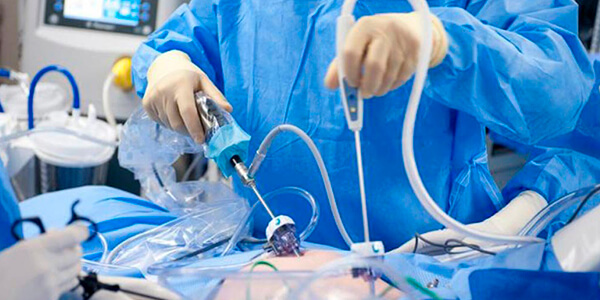
During the laparoscopic intervention, the kidney is removed along with the surrounding tissue and lymph nodes. In some cases, the adrenal gland is also extracted. The procedure is performed if the tumor is found in the upper part of the organ and there are risks of its invasion. At the end of the operation, all instruments are removed, and the incisions are sutured.
Rehabilitation period
After laparoscopic intervention, the patient remains in the intensive care unit for approximately one day. Then, the drain and catheter are removed. Immediately after this, the patient is allowed to get up and move around. For several days, pain in the wound area and nausea may occur. Most often, they pass quickly and do not require the prescription of special medications. Patients usually stay in the hospital for no more than 3-4 days.
The number of complications during and after laparoscopic interventions is significantly reduced compared to those occurring after traditional surgery. Nevertheless, bleeding and infectious processes are possible.
Laparoscopic nephrectomy in our center is always performed competently and in accordance with the accepted protocol. This reduces the risks of complications and side effects.