



Laparoscopic nephroureterectomy
The performance of laparoscopic nephroureterectomy remains the «gold standard» for the treatment of upper urinary tract urothelial cancer. Early oncological outcomes, data on oncological and recurrence-free survival are comparable to or exceed those of open surgery. According to the EAU Guidelines, there are specific indications for radical surgical treatment of patients with urothelial cancer, such as:
- suspicion of infiltration based on instrumental examination (CT urography, cystoscopy, ureteropyeloscopy with biopsy);
- high-grade malignant tumors;
- multifocal tumors (with two functioning kidneys);
- tumor size greater than 1 cm.
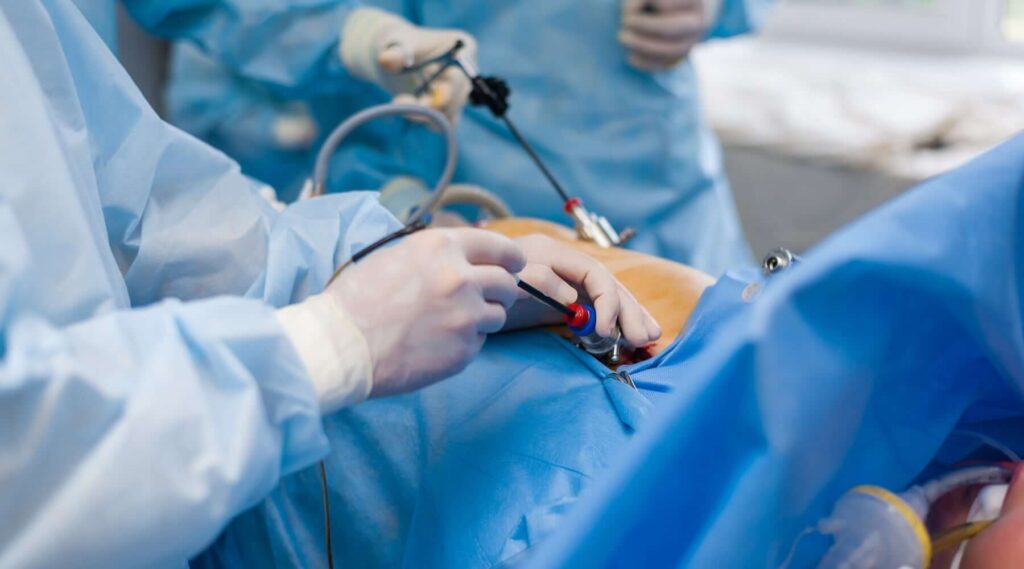
Nephroureterectomy with bladder wall resection involves the removal of the kidney with surrounding fat, Gerota’s fascia, the ureter, and a segment of the bladder wall with the ureteral orifice ≤1 cm in diameter. To date, a new minimally invasive approach has been developed — laparoscopic nephroureterectomy (LNU). It consists of three independent stages: radical nephrectomy, mobilization of the distal ureter/bladder wall, and tissue removal.
The goal of LNU is to replicate the main tasks of the «gold» standard of open surgical intervention, namely resection of the bladder wall and reliable closure of this defect. Ureteral resection is indicated for certain carefully selected patients (for example, patients with tumors in the lower third of the ureter, reduced kidney function, or a solitary kidney). Sometimes, in precisely staged, well-visualized renal pelvis tumors or well-differentiated ureteral tumors, laser coagulation may be possible.