



Laparoscopic kidney resection
The main advantage of this method is minimal intervention, which allows for the complete removal of the malignant neoplasm while preserving healthy kidney tissue.
Operation Description
Laparoscopic kidney resection (other names: partial nephrectomy, parital nephrectomy) is a minimally invasive surgical procedure that involves the removal of a part of the kidney affected by a pathological process. The most common cause is a neoplasm, less frequently it may be due to traumatic injury, cystic changes, or the presence of stones. The excision of the altered areas is performed within healthy tissues, avoiding trauma to the latter. The risk of recurrence is no more than 10%. Additionally, healing occurs several times faster compared to open surgery.
Indications for Surgery
Endoscopic removal of part of the kidney is performed in the presence of a malignant neoplasm. The tumor must be located within the organ, without spreading to surrounding structures.
Conducting the Operation
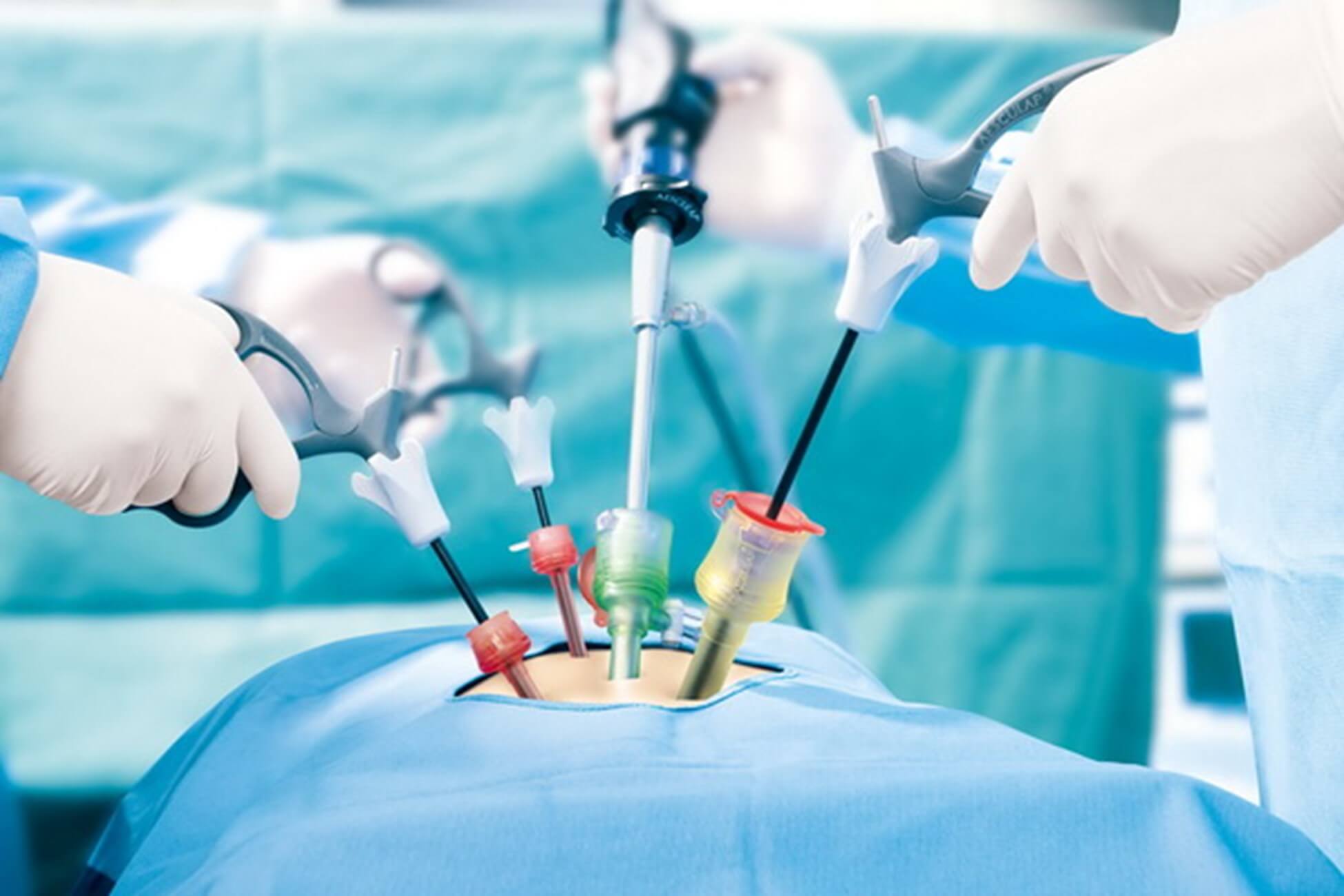
Laparoscopic kidney resection is performed under general anesthesia through punctures in the abdominal wall. Ports are inserted into the punctures, through which the laparoscope and surgical instruments are introduced. The laparoscope magnifies the surgical field several times, which is especially important during kidney resection, as this method, unlike nephrectomy, requires more precise and careful actions from the surgeon. After access to the kidney affected by the pathological process is ensured, its blood supply is temporarily occluded to avoid severe bleeding (thermal ischemia). The renal artery is clamped with a special clamp. At this stage, the surgeon performs the main part of the operation – the removal of the altered part of the kidney. The tumor is excised along with approximately 5 mm of adjacent healthy tissue. The ischemia time should not exceed 40 minutes; otherwise, serious kidney function disturbances may occur. Usually, the cessation of blood supply to the kidney does not exceed 15 minutes.
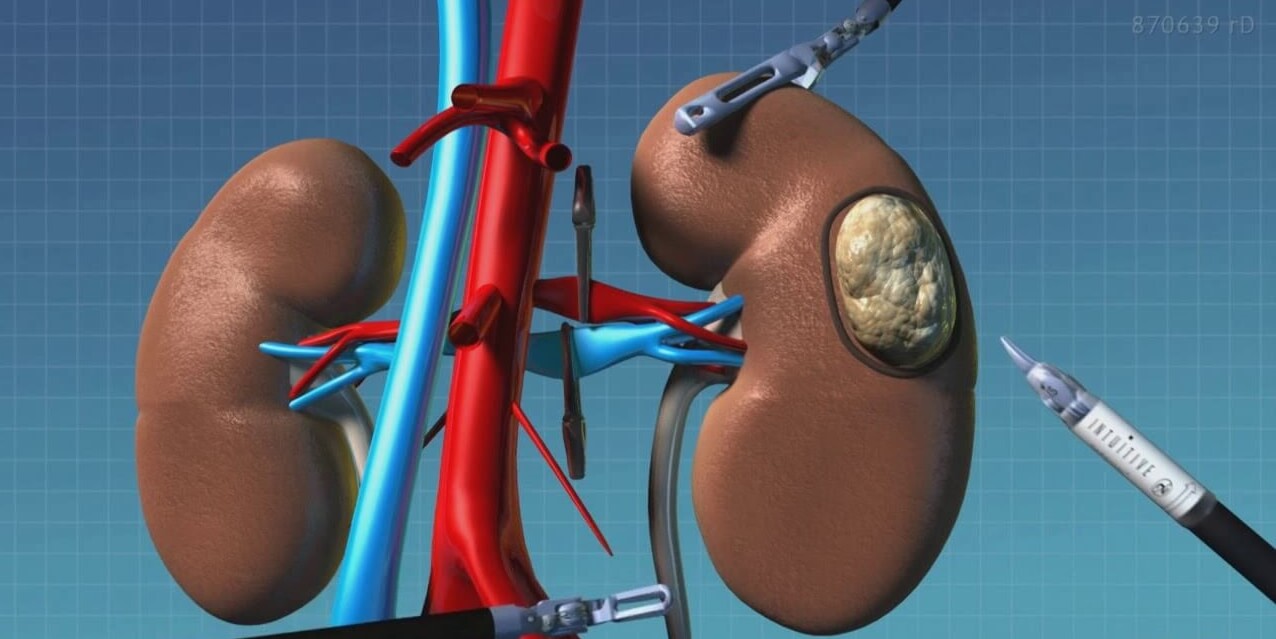
After the affected area is removed, the edges of the kidney are sutured, and the clamp is removed from the renal artery. The abdominal cavity and the area from which the tumor was removed are checked for bleeding. The excised tissues are placed in a special bag and removed through one of the punctures, which is specially enlarged for this purpose. Surgical instruments are then extracted, and sutures are applied to the skin punctures. The laparoscopic kidney resection operation lasts from 2 to 3 hours. After the operation, a drain is placed to remove fluid from the surgical field.
The removed tumor is sent for histopathological examination. The result, which comes in 5-7 days, determines the further treatment of the patient.