



Urolithiasis
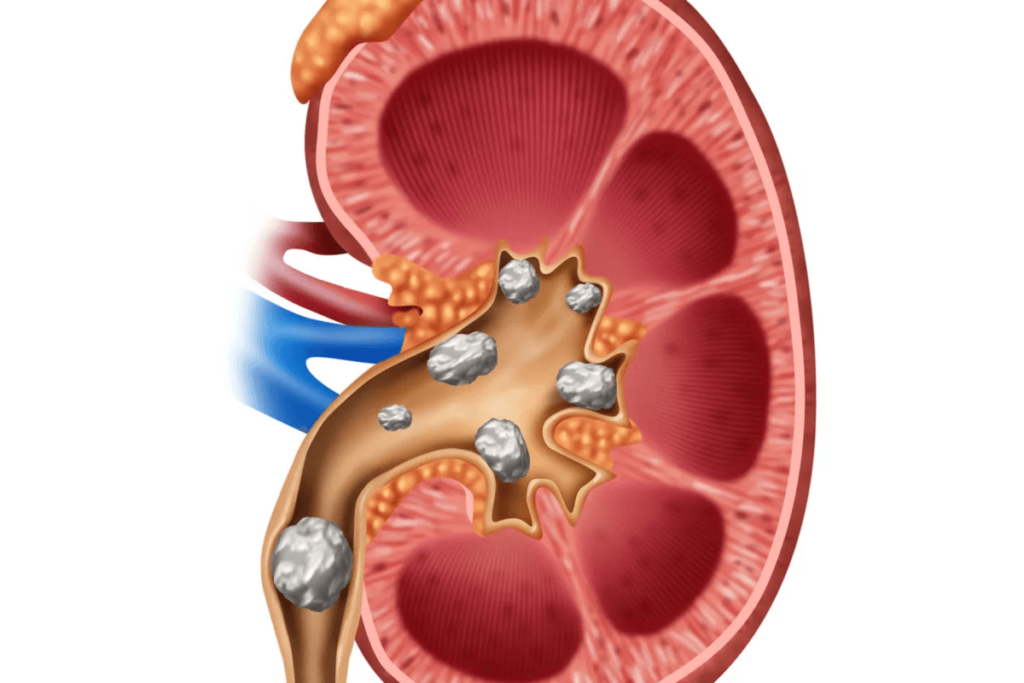
Kidney stone disease is characterized by the formation of a stone or multiple stones in the projections of the calyx and pelvis (anatomical structures of the kidney where urine is produced).
As the stones increase in the urinary tract, an inflammatory process develops, disrupting kidney function. Gradually, the so-called «shrunken kidney» begins to develop, which eventually stops functioning completely. The entire load falls on the second kidney, where various diseases may also develop.
Symptoms
At an early stage, when the stones in the kidney do not yet disrupt urine flow, the disease may be asymptomatic. As the disease progresses, pain in the lumbar region appears, blood may be present in the urine (hematuria), and more. Pain associated with kidney pathology can be paroxysmal (renal colic) or constant dull. It often radiates to the lateral sections of the abdomen and the hypochondrium. Conversely, small stones often manifest as severe pain, while large coral stones cause dull pain and discomfort in the lower back. The movement of the stone through the ureter is accompanied by severe pain.
Diagnosis
The first step in diagnosing kidney stone disease is an ultrasound examination. It can detect stones larger than 5 mm or suspect smaller stones. The exact size of the stones, their location, density, and composition are determined by multi-slice computed tomography (MSCT), which has nearly 100% sensitivity, including for so-called X-ray-negative stones composed of uric acid.
Attention! Removing stones from the kidney does not mean getting rid of kidney stone disease. Effective treatment involves eliminating the causes of the disease and, accordingly, preventing recurrence.
Treatment
Doctors have the ability to remove stones of any size and composition while fully preserving and restoring kidney function. Effective treatment is possible even in acute forms of kidney stone disease, when it is necessary to remove coral, infected (causing inflammatory processes in the urinary tract), or impacted (immobile) stones.