



Urinary incontinence
Urinary Incontinence – periodic or constant involuntary leakage of urine.
This condition predominantly affects women over the age of 35, most commonly during the postmenopausal period. In men, urinary incontinence occurs significantly less frequently, usually as a result of surgeries on the prostate gland. It is particularly unpleasant that the condition is accompanied by a characteristic odor that is noticeable to those around.
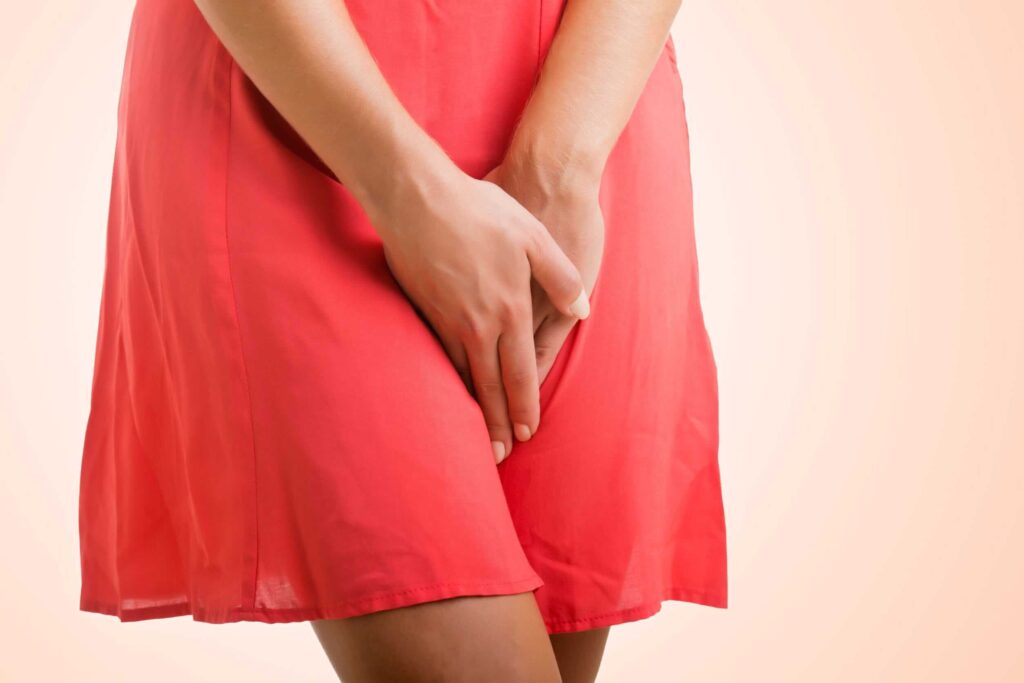
Types of Urinary Incontinence:
• Urgent urinary incontinence — involuntary leakage of urine that occurs immediately after a sudden, strong urge to urinate.
• Stress urinary incontinence (incontinence during exertion — ISUE) — involuntary leakage of urine during physical exertion, sneezing, or coughing.
• Mixed urinary incontinence — involuntary leakage of urine combined with a sudden, strong urge, as well as due to exertion, tension, sneezing, or coughing.
There is a common misconception that urinary incontinence is untreatable. In fact, in 9 out of 10 cases, the condition can be resolved. The problem lies elsewhere: few medical institutions have the necessary equipment and specialists skilled in these high-tech procedures.
Diagnosis of Urinary Incontinence
- assessment of the structure of the vaginal walls and its supportive ligamentous apparatus, uterus, and cervix,
- blood, urine, and genital secretions tests (smears for specific and non-specific flora)
- a cough test or TVT test (temporary instrumental compression of the urethra with a simultaneous cough test),
- specialized questionnaires
- ultrasound examination of the urinary and reproductive systems.
Treatment of Urinary Incontinence
Each patient is provided with a tailored treatment plan based on the individual characteristics of their body and the course of the disease. If the ligamentous apparatus is relatively intact and there is no significant prolapse of the pelvic organs, the doctor may perform a TVT procedure. During this procedure, so-called slings — strips of non-absorbable polypropylene threads up to 1 cm wide — are placed in the tissues under the urethra and compress the urethra in a controlled manner to retain urine. The effectiveness of this technique reaches 95%.
In cases of urgent urinary incontinence (accompanied by painful urges to urinate), our clinic offers non-surgical treatment based on M-cholinoblockers and alpha-adrenergic blockers. These medications prevent painful urges to urinate and restore normal bladder function.